
Trading in Dragon Adventures is one of the fastest ways to grow a roster without grinding every biome yourself, yet most players lose value on their first dozen offers because they do not have a clear read on the 2026 market. This dragon adventures trading guide puts a full value list, a step-by-step trade flow, and a repeatable fairness check in one place so first offers feel less like guesswork and more like a real negotiation. Whether someone is sitting on a single event dragon or trying to flip extras into a legendary, the framework below helps them move with confidence.
How Trading Works in the 2026 Meta
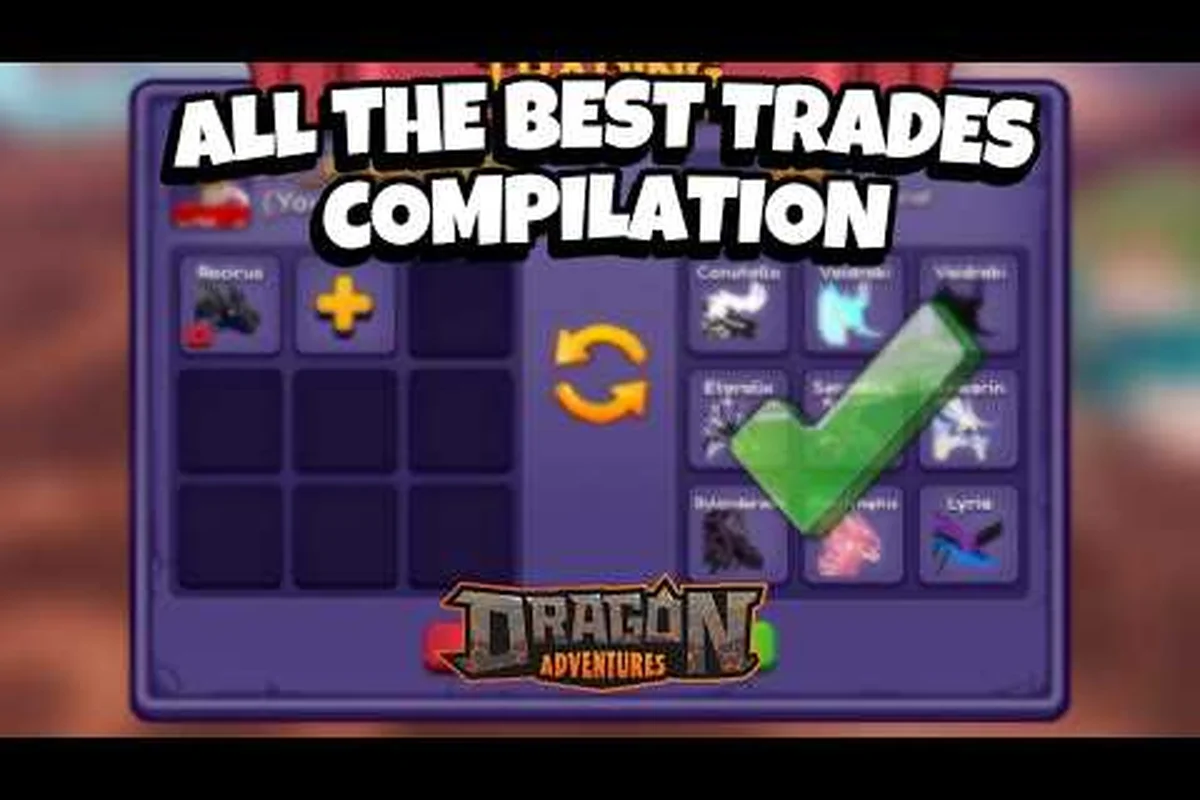
The trading system inside Dragon Adventures runs on a direct player-to-player offer screen rather than a fixed NPC shop, which means every swap is only as fair as the two traders behind it. Players open the trade menu, select one of their dragons, choose a target player from the server, and propose the swap. Both sides see each dragon's species, growth stage, and visible mutations before they confirm, and neither side loses the dragon until both players hit accept.
Understanding that flow matters because it shapes every other part of the dragon adventures trading guide. A clean trade happens before either side opens the menu: someone confirms they have the dragon, they agree on a value, and only then does the actual offer go through. Skipping that step is how most unfair deals happen, especially during event windows when the value of newer dragons has not settled yet.
Core Trade Rules Every Player Should Know
The trade screen enforces a small set of hard rules, and the rest of the system relies on community standards built around the Dragon Adventures value list. Knowing both layers keeps offers out of the rejection pile: hard rules govern server status, the two-player cap, and event-popup locks, while community standards govern mutation disclosure, growth stage premium (Stage 4 often sells at +5–10%), and the 10–15% value-match window that reputable traders use to gauge a fair swap before hitting confirm.
| Rule | What It Covers | Practical Impact |
|---|---|---|
| Two-player cap | Only two players per trade | You cannot bundle three people into one swap |
| Online status | Both players must be on the same server | Cross-server trades are not supported |
| Locked during event popups | Trade button disables during certain event prompts | Wait a second and retry if the button grays out |
| One-sided cancel | Either side can cancel before final confirm | Use this when an offer does not match what was agreed |
| Growth stage visibility | Growth Stage 1–4 shown on the card | Stage 4 adults often sit at a small premium |
Community standards fill in the rest. According to active players on the Dragon Adventures subreddit, an offer is considered fair when both dragons sit within roughly 10–15% of each other on the current value list, and reputable traders always disclose mutations like Aged or Massive before sending the offer. These are not enforced by the game, but ignoring them is how traders earn a bad reputation inside the Dragon Adventures community Discord and the r/DragonAdventures subreddit.
Where Trading Fits in the Bigger Game Loop
Trading is a parallel progression lane to breeding, exploration, and event farming. A player who spends an hour in the Tundra biome hunting for rare eggs can swap a duplicate for something they would otherwise have to grind another three hours to obtain. That time savings is the real reason the trading system exists, and the value list below is the tool that unlocks it.
Dragon Adventures Value List and Tier Snapshot for 2026
The dragon adventures value list shifts every season because new event dragons enter rotation and older spawns leave the live pool. The table below is a working snapshot of the 2026 market, built from community-reported trades on Reddit and Discord, and it should be treated as a starting reference rather than a fixed price tag. Values move quickly when an event dragon like Leonelios or Celesteis is live, and even Massive or Aged mutations can shift a dragon one tier in either direction.
Tier Snapshot by Dragon Category
| Tier | Example Dragons | Typical 2026 Trade Range | What You Usually Get in Return |
|---|---|---|---|
| S — Event legendaries | Leonelios, Celesteis, Kostragula, Contotoro | 3+ mid-tier event dragons or one S + extras | Top-tier event pairs plus potions |
| A — Limited spawns | Sandshark, Harremara, Solstice rerun drops | 2 solid A or B tier dragons | A-tier plus growth items |
| B — Stable rares | Aura cluster, Solaris cluster, Underworld cluster | 1 B or 2 C tier | Fair 1-for-1 with a small potion stack |
| C — Common farmables | Forest and Jungle biome standards | 2–3 of the same tier | Bulk offers, often for collection fillers |
| D — Starter pool | Origins Island base dragons | Almost always bundled | Used as value toppers in larger offers |
The S-tier band is where most mis-trades happen because event dragons are scarce and excitement runs high. A useful rule of thumb, reported by long-time traders on the subreddit, is to wait at least 48 hours after a new event dragon drops before accepting offers on it. The first 24 hours are pure speculation, and the second 24 hours are when the real value range starts to form. For a deeper breakdown on how Contotoro specifically holds its value across events, the Contotoro value guide goes into that one dragon in detail.
How Mutations and Growth Stage Affect Value
Two identical species at Growth Stage 1 and Growth Stage 4 are not the same trade, and neither are two dragons where one carries Massive and the other does not. The community applies a small set of multipliers on top of base value, and they stack in predictable ways.
| Modifier | Typical Value Shift | Notes |
|---|---|---|
| Growth Stage 4 (adult) | +10–20% | Fully grown dragons are trade-ready and skip the feeding grind |
| Massive mutation | +25–60% | Tier-dependent; huge on already rare species |
| Aged mutation | +15–30% | Visual rarity, prized by collectors |
| Potion color stack (3+) | +5–15% | A clean color combo is worth a small premium to themed rosters |
| Negative growth hunger | -10% | Hunger under 50% halts growth and traders discount accordingly |
These numbers are community averages rather than hard rules. A player who only collects Aged dragons might pay more than the listed premium, while a combat-focused player will discount cosmetics entirely. The point of the table is to keep the gap between the two sides of a trade from drifting past the 15% fairness window most traders use.
Dragon Adventures How to Trade Step by Step
A clean trade follows a predictable sequence, and skipping steps is the fastest way to lose value. The flow below is what experienced players run when they are moving dragons in the 50,000 to 500,000 value band, and it scales down just as well to starter trades. Anyone learning dragon adventures how to trade for the first time should run the same checklist on a cheap swap before they risk a real event dragon.
Pre-Trade Checklist for New Traders
Before opening the trade menu, both players should confirm five things in chat or through a trusted middleman — and skipping this step is the single most common reason fair-value dragon trades fall apart mid-confirmation. Because Dragon Adventures rerolls, Aged tiers, and color-locked variants can shift a single dragon's value by 30% or more overnight, a verbal "looks fair" handshake is not enough; traders who screenshot the value list row for both pets before sending the offer consistently report fewer rollbacks.
-
Species on both sides, including any reroll or variant names
-
Growth stage and hunger level
-
Visible mutations, especially Massive, Aged, or color-locked variants
-
Whether potions or items are part of the deal
-
The expected fairness range from a recent value check
A quick value check usually means opening the dragon adventures trade value calculator or the latest community value list, then comparing both dragons on the same tier row. If the gap is wider than the agreed fairness window, the offer should be reworked before anyone hits the trade button. For traders who want a written reminder of the common scam patterns, the trade safety checklist covers what to look for before any offer goes through.
Sending and Confirming the Trade
Once both sides agree in chat, the actual in-game flow takes about 30 seconds, and most of that window is spent on the two-card review screen rather than menu navigation — the trade menu opens in roughly 2 seconds from the player list, dragon selection adds another 3 to 4 seconds depending on lair size, and the remaining time is the side-by-side card preview where species, growth stage, and mutation slots are visible. Treat those 30 seconds as the last checkpoint before commitment, not as a formality, because once both players hit confirm the trade is final and cannot be reversed by support. A good habit is to narrate each field out loud in chat (e.g., "Frostbite, 100% growth, four mutations including Zodiac") so any mismatch is caught while the cancel button is still available, rather than discovering a swapped dragon in your lair minutes later.
| Step | Action | What to Watch |
|---|---|---|
| 1 | Open the trade menu from the player list | Make sure the right player is selected |
| 2 | Pick the dragon from your roster | Confirm species, growth, and mutation one more time |
| 3 | Wait for the other side to add their dragon | The screen shows both cards side by side |
| 4 | Read both cards out loud in chat | Especially important for mutations |
| 5 | Hit confirm only after both sides verbally agree | Either side can cancel before final lock |
| 6 | Check your lair after trade | Confirm the new dragon landed in the right slot |
Most failed trades fall apart at step 4, when one side notices a missing mutation or a wrong growth stage. Slowing down at that step costs a few seconds and saves a dragon that would otherwise be a long-term regret.
Building a Repeatable Dragon Adventures Trading Strategy
A trading strategy is what separates players who consistently grow their roster from players who break even on every deal. The dragon adventures trade values 2026 market rewards patience, record-keeping, and a clear sense of what each player is actually trying to collect. A strategy does not need to be complicated; it just needs to be repeatable.
Decide What You Are Collecting
The first decision is whether the player is trading toward a target roster or trading for profit. A target roster player wants specific species, growth stages, and mutation combos, and they are usually willing to pay a small premium to get there. A profit trader is looking for mispriced offers, usually right after a new event drops, and they flip dragons over a 3 to 7 day window. Both styles work, but mixing them in a single trade is how people end up regretting an offer a day later.
| Style | Best Market Condition | Typical Hold Time | Risk Level |
|---|---|---|---|
| Target roster | Stable market, mid-event | Until the right offer appears | Low |
| Short-term flip | Right after a new event dragon drops | 3–7 days | Medium |
| Long-term hold | Before a Solstice or Halloween window | Weeks to months | High |
| Bulk filler trades | Off-event lulls | Same day | Low |
Picking one style keeps the value list honest. A flip trader should not pay collector premium for an Aged mutation if they are going to resell next week, and a collector should not expect a flip trader to accept a fair offer when the dragon is still moving in price.
Reading Offers Without Getting Burned
Every offer is a small data point. Players who keep a simple log of what they were offered, what they accepted, and what the dragon was worth a week later tend to get sharper at valuing trades within a month. A basic log entry only needs the date, the two species, the rough value range, and whether the trade went through.
Reading offers also means knowing when to walk away. If a counteroffer is more than 20% below the agreed value range, the other side is either testing the waters or working from a stale value list. A short pause to share a recent community value reference usually sorts it out, and if it does not, walking away is the right call. Traders who want a broader framework for moving from beginner swaps into consistent profit can work through the profit-oriented trading guide to sharpen the negotiation side.
Keeping Your Dragon Adventures Trade Values Up to Date
Value lists are living documents, and the best traders refresh their reference at least once a week. The most reliable signals come from three sources, each with its own bias, and combining them produces a much more accurate read than relying on any one feed.
| Source | Strength | Weakness | How to Use It |
|---|---|---|---|
| Official game updates | Authoritative on new dragons and rerolls | Light on player value ranges | Anchor new entries to the official release notes |
| r/DragonAdventures value threads | Real-time community check on W/F/L posts | Echo-chamber risk during hype | Cross-check three or more recent threads before trusting a number |
| Dragon Adventures Discord | Fastest signal on event drops and giveaways | Some claims are unverified | Use trade-channel screenshots rather than chat claims |
A practical refresh routine is to check the subreddit's pinned value thread, skim the Discord trading channel for any new event discussion, and re-run a personal trade log to see how the last week's accepted offers compare. Over a month, this builds a private value curve that is usually more accurate than any single public list, because it reflects what that specific player can actually get in their trading circle.
Spotting When the Market Is About to Move
Three signals usually appear a day or two before a major value shift. A new event dragon gets datamined on the subreddit, an official teaser drops on the Discord, or a previously rare dragon suddenly shows up in bulk trades. Watching for these signals lets traders thin out a position before a value drop and stock up before a value spike, which is the real edge behind consistent dragon adventures trade values 2026 success.
For traders who want a single hub to monitor all three signals at once, the community and Discord trading roundup pulls together the most useful channels and threads in one place, including real-time price tracking bots, daily value list screenshots from top traders, and pinned alert posts that flag datamined event dragons the moment they appear on the subreddit. Following that hub alongside a personal value list means traders can react to a sudden bulk-trade dump of a previously rare dragon within minutes, adjusting their offers before the rest of the market reprices — which is the difference between locking in dragon adventures trade values 2026 profits and buying in at the top of a spike.
Your Weekly Trading Cadence
A weekly routine is what turns the value list, the trade flow, and the strategy notes into actual roster growth. The routine below is the one most long-term traders in the community run, and it scales to either a casual 30-minute player or someone who logs several hours a day.
| Day | Action | Time Needed |
|---|---|---|
| Monday | Refresh value list from subreddit and Discord | 15 minutes |
| Wednesday | Review trade log and note any gaps | 10 minutes |
| Friday | Open trade menu, send 2–3 value-checked offers | 20 minutes |
| Sunday | Close out pending offers, log final outcomes | 15 minutes |
Over a month, that adds up to roughly 5 hours of focused trading, which is usually enough to land one or two meaningful upgrades without burning out on the grind. The key is consistency: the trader who checks values once a week and sends two clean offers a week almost always ends up with a better roster than the player who sends twenty offers in one hype-fueled session and then walks away from the system for a month.
The dragon adventures trading guide above is designed to be a reference traders can return to as the 2026 meta shifts, and every section ties back to the same principle: a fair trade is one where both sides feel the gap is small enough to hit accept without hesitation. Keep the value list fresh, run the trade flow the same way every time, and treat the log as the real source of truth, and the rest of the market starts to feel a lot more predictable.
Frequently Asked Questions
What is the fastest way to find current dragon adventures trade values 2026?
The fastest signal is the r/DragonAdventures subreddit's pinned value thread, refreshed within the last 24 hours, cross-checked against the Dragon Adventures Discord trading channel. Comparing both usually lands within a 5–10% range of what serious traders will accept, and a third data point from a recent accepted trade locks the estimate in.
How do I trade fairly as a beginner with no rare dragons?
Start by trading two or three C-tier farmable dragons for one B-tier rare from a player who already has a few extras. Bundle a small potion stack if the gap is close, and always log the trade. Beginners who run the same checklist on cheap swaps for a week usually have enough experience to move into A-tier offers without losing value.
Do mutations like Massive or Aged always add value?
They usually do, but the premium is tier-dependent. Massive adds 25–60% on already rare species but barely moves a common farmable, while Aged is a collector favorite and pays a premium in themed trades. A mutation is not free money; it is a small boost that only matters when the buyer cares about the look.
Where can I find a safe place to practice dragon adventures how to trade?
A quiet server, a trusted friend, and a low-value C-tier dragon is the safest practice setup. Run the full pre-trade checklist, send the offer, and log the result. After three or four of these dry runs, the in-game flow becomes muscle memory and the real offers feel a lot less risky.
How often does the dragon adventures value list change?
A new event dragon, a reroll window, or a balance patch can shift the list in a single day, while off-event weeks usually hold values within a small band. Checking the list once a week is enough for casual traders, and active traders usually refresh after any official announcement on the Discord.